
- By BitSeed
- AI Frontier
- 07 Sep
Hotel Group Deploys AI Agents: QWEN, DeepSeek, or Llama – Who is the Optimal Choice?
As AI agent technology accelerates its penetration into the hotel industry, selecting the right large model foundation has become a critical decision for hotel groups. According to industry data, by 2024, over 3,000 mid-to-high-end hotels in China have begun piloting intelligent voice interaction systems. Among these, hotels equipped with in-room smart terminals have seen an average 23% increase in guest satisfaction and a 35% improvement in service efficiency. However, faced with mainstream options like QWEN, DeepSeek, and Llama, how should hotel groups make their decision?
Real Comparison of the Three Models
From actual deployment data, QWEN-72B performs most prominently in Chinese contexts, with an intent recognition accuracy rate of 94%. Particularly when handling high-frequency hotel requests such as "Send a toothbrush to room 1208" or "Wake me up at 7 AM tomorrow," it outperforms Llama-70B by 12 percentage points. Although DeepSeek excels in code generation, it is slightly deficient in multi-turn dialogue and contextual understanding, often "forgetting" previous context – a fatal flaw in hotel AI voice assistant scenarios. In terms of cost, QWEN's private deployment方案 costs approximately 80,000 to 120,000 yuan annually per hotel. While Llama is open-source and free, considering the need for additional Chinese optimization and ongoing maintenance, the comprehensive cost is actually about 20% higher. DeepSeek's API call model看似 flexible, but in high-concurrency hotel scenarios, the average monthly cost may exceed 30,000 yuan.
Actual test data from a leading chain brand is more convincing: when processing 100,000 guest requests, QWEN's response time remains stable within 1.2 seconds, Llama takes 1.8 seconds, and DeepSeek may even delay to over 3 seconds during evening peak hours. For guests accustomed to instant responses, this difference directly impacts the experience. More importantly, QWEN supports local deployment, ensuring guest privacy data does not leave the hotel's internal network – a crucial factor for high-end hotels that frequently host government and business guests. In contrast, DeepSeek's cloud-based model and Llama's open-source nature both pose potential data security risks.
Special Requirements for Voice Interaction Scenarios
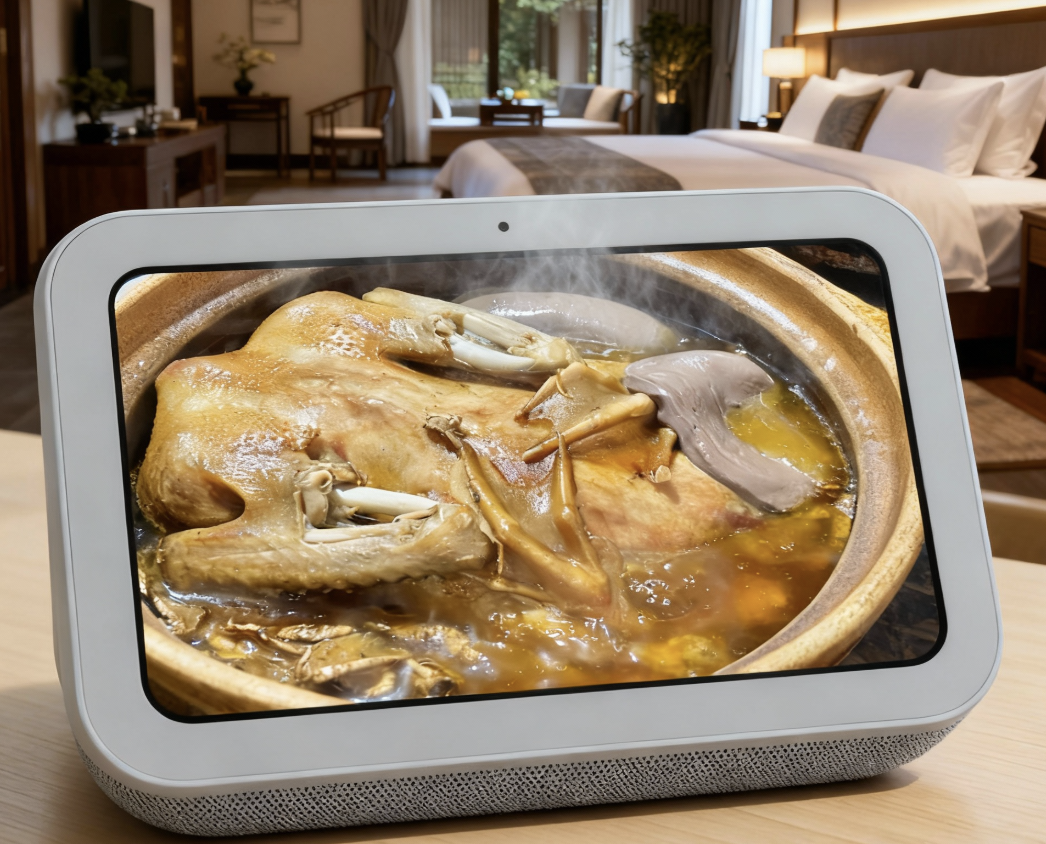
The core of a smart hotel solution lies not only in model capabilities but also in implementation form. An international five-star brand once tried a pure APP solution, requiring guests to scan a QR code to use it, resulting in a usage rate of less than 8%. After switching to in-room smart terminals, the daily average interaction count soared to 3.7 times. This case illustrates that in the private space of a guest room, voice interaction is the most natural method. To achieve smooth voice interaction, the model must possess three capabilities: fast response, context memory, and dialect recognition. QWEN has clear advantages in all three dimensions – it not only supports 23 Chinese dialects but also remembers guests' preferences throughout their stay, such as vague instructions like "The same coffee as yesterday."
Although Llama performs well in English environments, it often exhibits semantic deviations when processing Chinese. Data from a foreign-related business hotel shows that when using Llama to handle Chinese requests, the need for secondary confirmation is as high as 31%, severely affecting the fluency of intelligent voice interaction. DeepSeek has a shortcoming in another dimension – it is more suitable for single-turn Q&A. For compound instructions like "First turn off the lights, then switch to night light mode after ten minutes," the execution success rate is only 67%.
Implementation Strategy and Return on Investment
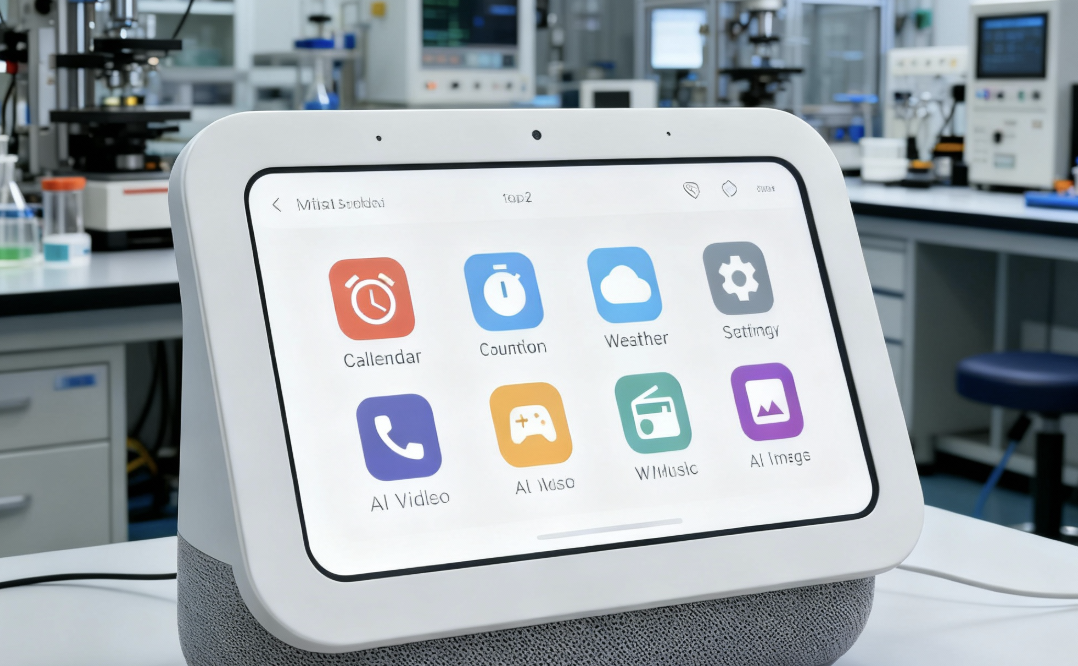
Based on the practical experience of hundreds of hotels, a clear industry consensus is emerging: domestic hotels should prioritize the QWEN series, not only for its excellent Chinese language capabilities but also because it offers a complete private deployment方案 that can be directly upgraded on the hotel's existing smart speakers without the need to replace hardware. A business chain recovered its investment in just 3 months through in-room intelligent upgrades – room rates increased by 8% due to intelligent services, while front desk labor costs decreased by 30%. For international brand hotels with a foreign guest ratio exceeding 40%, a hybrid deployment of QWEN International Edition or Llama can be considered, but additional optimization investments should be prepared.
A detail worthy of attention for all hotel managers: 70% of the effort in successful AI agent deployment lies in scenario adaptation rather than the model itself. The CTO of a resort hotel group shared a viewpoint: "We chose QWEN not because it is the most advanced, but because it understands Chinese guests best. When a guest says 'The room is a bit cold,' QWEN will ask whether to adjust the air conditioning or bring a blanket, while Llama might only mechanically increase the temperature." This subtle difference precisely determines whether guests will give an extra star on review websites.
The digital transformation of the hotel industry has moved from the stage of "whether to do it" to "how to do it well." As in-room smart terminals become a standard feature, selecting the right large model directly impacts return on investment. Considering multiple dimensions such as comprehensive capabilities, cost, and security, QWEN has the highest适配度 for the domestic hotel market. Its advantages in Chinese contexts and local deployment capabilities exactly align with the hotel industry's dual needs for service quality and data security. Hotels that have taken the lead in completing intelligent upgrades are using their growing RevPAR (Revenue Per Available Room) to prove that in the AI era, choosing the right technical path is more important than pursuing technological advancement. After all, the essence of intelligent voice interaction is service, and the core of service will always be understanding and responding to guests' real needs.
 28 Oct, 2025