
- By BitSeed
- AI Frontier
- 28 Oct
Breaking the Deadlock: Reconstructing the Guest Experience from 'One Night Stay' to 'Three Meals a Day' for Homestays
Homestay dining is facing an awkward reality: data shows that only 38% of guests choose to dine at the homestay, while over 60% prefer to spend time going out to find restaurants. The secondary consumption rate of homestay dining is less than 20%, with many guests only having breakfast at the homestay and opting to eat out for lunch and dinner. This phenomenon of 'staying but not eating' directly restricts the overall revenue capacity of homestays. Currently, homestay dining generally has three major pain points: lack of characteristics making it difficult to attract customers, serious homogenization leading to insufficient competitiveness, and single service experience failing to form a consumption closed loop. The key to solving this problem lies in shifting from单纯的住宿服务转向深度体验的打造.
Localized Experience: Awakening Guests' Taste Buds and Emotions
The core of enhancing the attractiveness of homestay dining lies in deeply cultivating localized characteristics. The practice of a homestay in Songyang, Zhejiang is very convincing - they abandoned the standardized catering model and instead created an experience of 'living like villagers': in the morning, taking guests to pick vegetables in the village grandma's garden at the entrance of the village, learning to make the local traditional snack 'huizhituan' (ash juice dumpling) in the morning, following tea farmers up the mountain to pick tea in the afternoon, and sitting around the fire pit at night listening to villagers tell local stories. This in-depth localized experience makes guests reluctant to leave, and some guests from Shanghai even temporarily extended their two-day stay to five days. Localization is not only reflected in ingredients but also in cooking methods and cultural inheritance. A homestay in Fujian Tulou has tried an innovative model: instead of providing a unified breakfast, they take guests to different villagers' homes for meals every day. Today, guests taste Aunt Li's braised pork with dried bamboo shoots, tomorrow they enjoy Uncle Wang's Hakka stuffed tofu, with half of the meal fee going to the villagers and half to the homestay. This approach not only allows guests to experience authentic 'local flavor', but also creates additional income for local villagers, and the homestay's dining revenue doubled within a year as a result.
Professional Empowerment: Quality Improvement Brought by Chefs Going to the Countryside
Facing the continuous improvement of consumers' requirements for rural dining quality, professional empowerment has become an important path for the upgrading of homestay dining. The 'Chefs Going to the Countryside' project launched by the Beijing Municipal Bureau of Culture and Tourism is a successful case: by organizing famous chefs from star-rated hotels and time-honored restaurants to pair up with homestays for one-on-one assistance and guidance. This project has achieved remarkable results: Xiude Valley Homestay in Fangshan District, under the guidance of professional chefs, developed exquisite vegetarian banquets such as 'Golden Soup Eight Treasures' based on self-grown organic vegetables and medicinal and edible wild vegetables; Jingzhuang Town in Yanqing District innovatively launched a model of tofu fusion dishes + four-season dishes on the basis of traditional tofu banquets, integrating Huizhou cuisine characteristics. The involvement of professional chefs not only improves the 'color, aroma, and taste' of the dishes but also helps homestays explore the cultural stories behind the food. Gushan Village in Miaofengshan Town, Mentougou District, through pairing activities, developed banquets with local cultural characteristics such as 'Miaofengshan Rose Banquet' and 'Miaofengshan Cherry Banquet', transforming homestay dining from just filling the stomach to eating well and experiencing culture.
Refined Operation: Building a Positive Interaction Between Dining and Accommodation
For homestay dining to achieve sustainable profitability, it is necessary to establish an operating system that complements the accommodation business. Seasonal operation strategies are particularly important - a homestay in Yixian County, Anhui designs experience activities according to different seasons: picking pre-Ming Dynasty tea in spring, catching fish in the stream in summer, helping harvest rice and make osmanthus wine in autumn, and organizing dumpling making and spring couplet writing in winter. This experience design centered around dining has even turned the traditional off-season into peak season, with the homestay's winter revenue increasing by 20% compared to the same period the previous year. Interactive dining experiences are an effective way to enhance guest participation. By offering cooking courses and allowing guests to personally make local specialty foods, it not only prolongs the guests' stay time at the homestay but also promotes secondary consumption. For example, a homestay in Zhejiang launched a 'Medicinal Cuisine Class', teaching guests to make osmanthus cakes and health-preserving tea, which extended the guests' experience time by more than twice and stimulated their desire for social sharing.
Technological Empowerment: Enhancing Dining Experience Through Smart Terminals
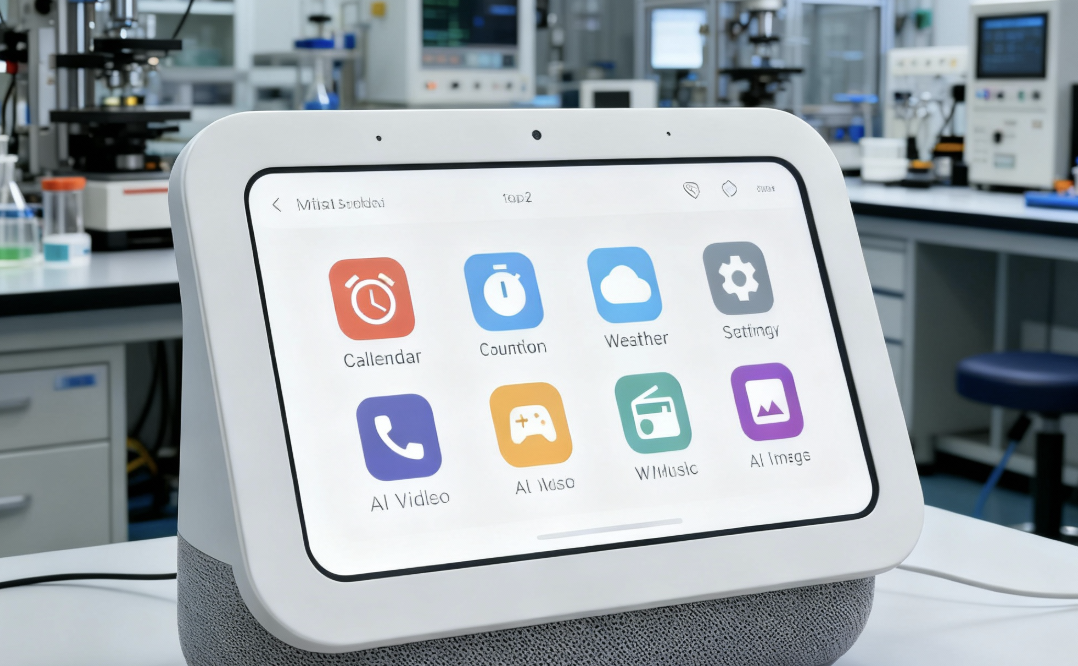
In the digital age, the application of intelligent technology provides new possibilities for homestay dining. Through intelligent voice interactive terminals, guests can conveniently inquire about dish information, learn about ingredient stories, and even directly participate in the cooking process. This technological empowerment not only improves service efficiency but also creates a unique dining experience. For example, some forward-looking homestays have begun to try to provide services such as dish reservation and ingredient traceability display through in-room smart terminals, making guests look forward to the food before arriving at the restaurant. The value of smart terminals lies not only in providing information but also in creating emotional connections. When guests learn about the story behind each dish through voice interaction or see the planting environment of ingredients through the screen, dining transcends simple physiological needs and becomes part of cultural experience. This in-depth experience is the key to attracting guests to dine at the homestay.
The true value of homestay dining does not lie in simply providing food, but in conveying local culture and creating unique memories through cuisine. Successful homestay dining operations need to organically integrate localized experience, professional empowerment, refined operation, and technological application to form core competitiveness different from standardized hotels. The future of homestay dining should be a presence that makes guests 'stay for a night specifically for a meal' - this is not only an increase in dining revenue but also a重塑 of the overall value of the homestay.
 28 Oct, 2025