
- By BitSeed
- Smart Hardware
- 28 Oct
Analysis of Smart Speaker Hardware Solutions: A Deep Dive from Chip Selection to Real-World Application
The hardware design of a smart speaker involves far more than just assembling components; it represents a comprehensive consideration of product positioning, cost control, and scenario adaptation. As a provider of AI voice interaction terminal equipment, our collaboration with clients in sectors like hospitality and education reveals that subtle differences in hardware solutions directly impact end-user satisfaction. Current projections indicate the Chinese AI speaker market is expected to exceed hundreds of billions of USD by 2025, with home entertainment accounting for 60%, smart home control 25%, and emerging sectors like education/training and healthcare making up the remaining 15% . This growth is underpinned by the continuous iteration and precise positioning of hardware solutions.
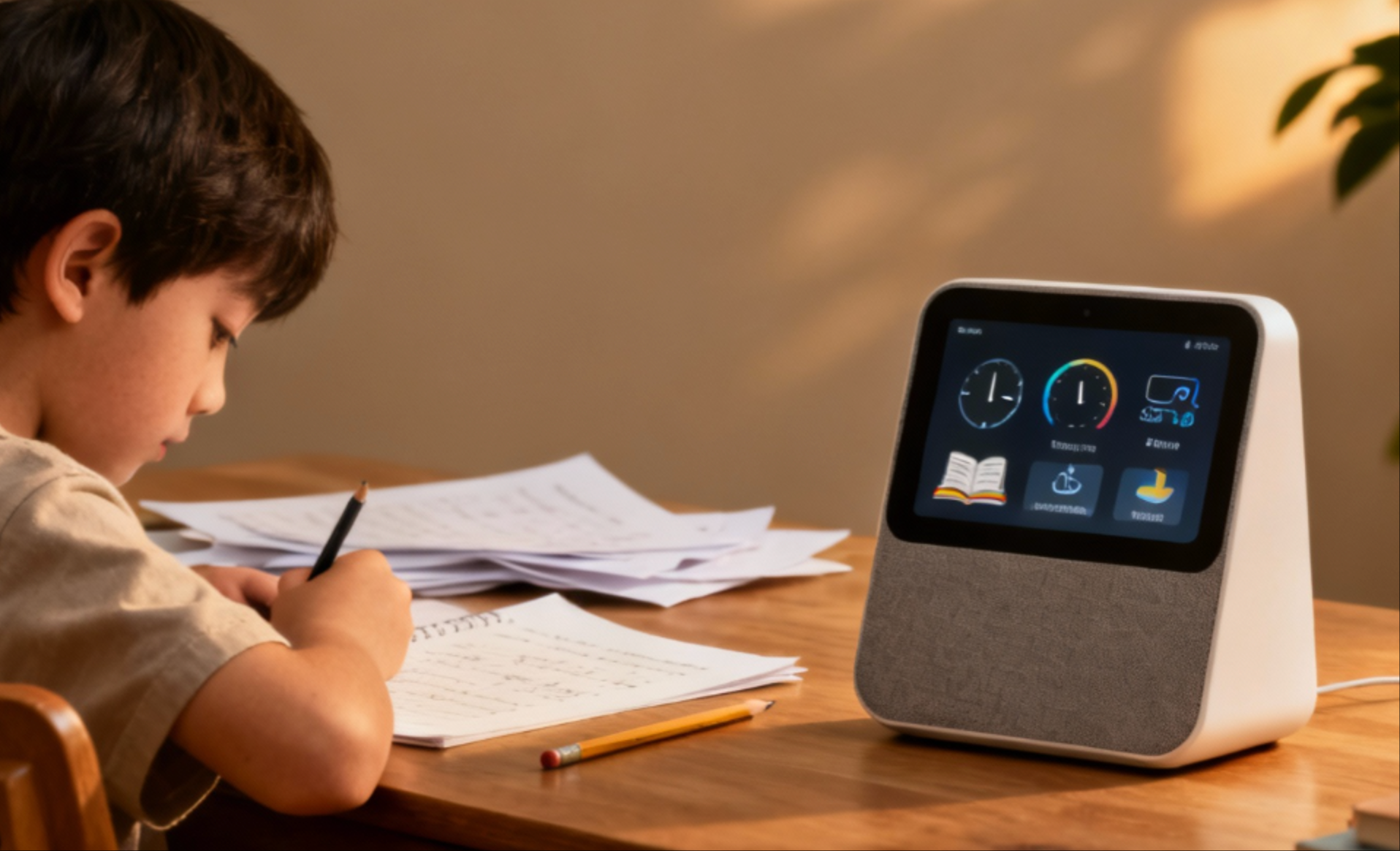
The choice of the main control chip, the "brain" of the smart speaker, reflects the varying strategies of manufacturers. The MediaTek MT8516 series, integrating a quad-core 64-bit ARM Cortex-A35 architecture (1.3GHz clock speed) with built-in Wi-Fi and Bluetooth modules, is a preferred choice for many manufacturers . This chip is specifically designed for cloud-service voice assistants and supports up to 8-channel TDM microphone arrays, striking a reasonable balance between performance and power consumption . The Allwinner R16, housing a quad-core A7 architecture and integrating HiFi-grade audio decoding, secures a place in the entry-level market with its cost-effectiveness . For devices with screens, such as a certain major tech company's smart video speaker, octa-core processors like the Allwinner R58 are typically employed to handle video playback and touch operations . Ultimately, chip selection is a trade-off between computational performance, power consumption, and cost. In hotel room scenarios, stability for multi-device connectivity and low-power standby are prioritized, whereas youth learning scenarios demand high audio processing precision and fast screen response times .
The design of the microphone array is crucial for the first impression of voice interaction. Mainstream solutions often utilize a 6-microphone circular array, supported by Acoustic Echo Cancellation (AEC) and beamforming algorithms . For instance, a certain major tech company's Smart Speaker 2 IR version incorporated a "6-piece infrared emitter array" design, enhancing its ability to control traditional home appliances . However, increasing the number of microphones raises costs and algorithm complexity. In educational settings, we find the array's pickup angle and noise cancellation capability are often more critical than merely maximizing the number of mics. Achieving superior pickup quality relies on the synergistic design of microphone placement, cavity structure, and noise cancellation algorithms.
The audio system is a key differentiator in hardware schemes. Some screen-equipped models from a certain major Chinese tech company use a 3-inch 10W full-range speaker paired with an extra-large 1300CC sound chamber, aiming for vocal clarity and bass performance . In contrast, speakers like the Huawei Sound X feature a tri-amplified architecture co-designed with Devialet, with peak power up to 60W, focusing on high-frequency extension and dynamic range . Sound chamber design involves compromises between physical size and acoustic performance: sealed designs (e.g., Echo) aid front-end signal processing but can limit sound effects, while ported designs (e.g., Rokid) may improve sound quality but increase signal processing complexity . For adolescent learning scenarios, speaker clarity at varying volume levels is often more critical than maximum power output.
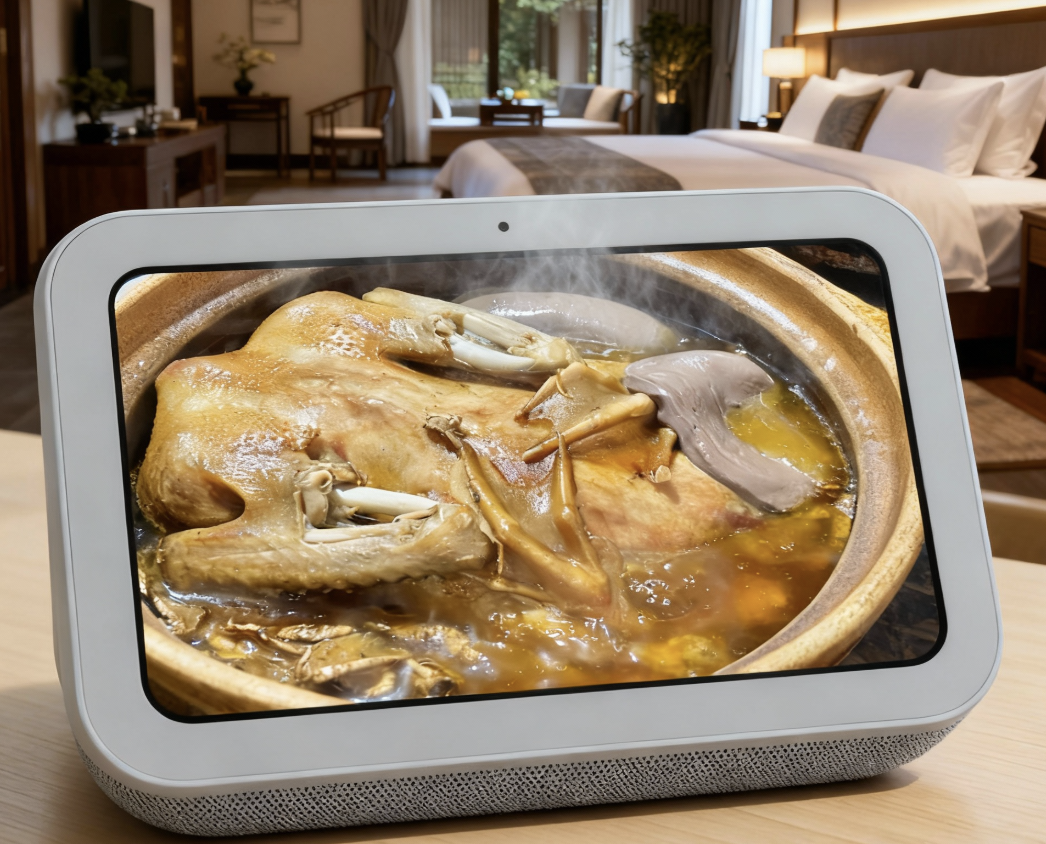
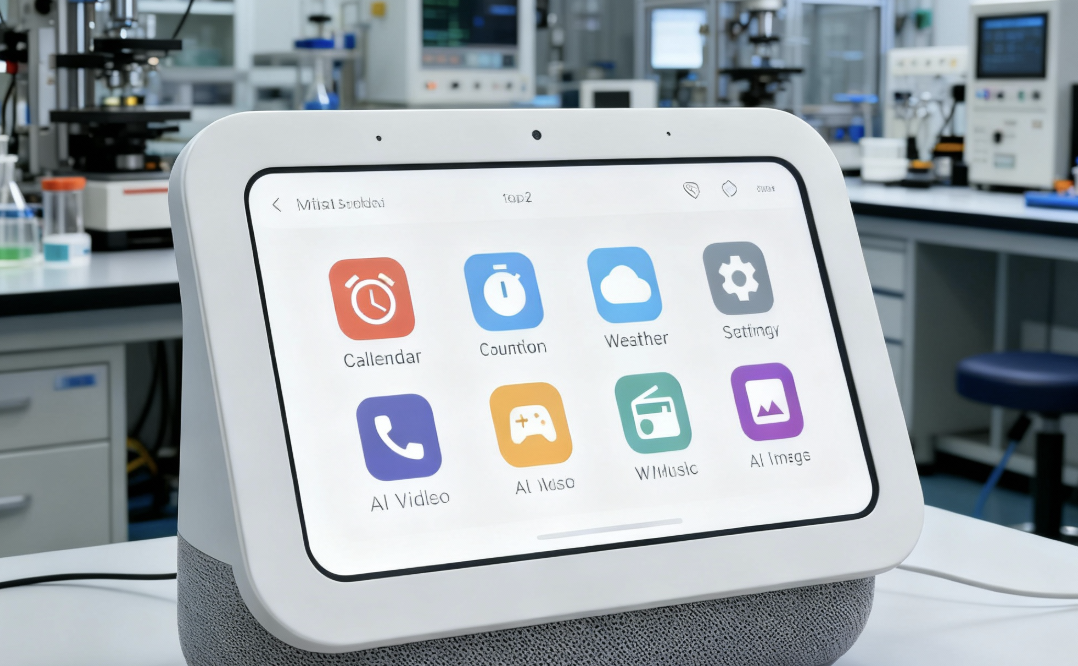
The incorporation of a screen fundamentally changes the interaction paradigm. A certain major tech company's X9Pro, for example, features an 8-inch screen with a resolution of 1280×800, supporting touch and an eye-protection mode for children . Screen-equipped devices face greater challenges in processing power, heat dissipation, and power consumption, often necessitating more robust platforms like the Allwinner R58 or MediaTek MT8167A . In hotel room scenarios, key metrics include the screen's viewing angles, wake-up speed, and standby power consumption, requiring the hardware solution to thoroughly consider actual usage patterns.
Power management and connectivity equally reflect the maturity of hardware design. Most smart speakers use wired power supplies to ensure 24/7 standby readiness, though some portable models are beginning to incorporate battery solutions . For wireless connectivity, support for dual-band Wi-Fi (2.4GHz/5GHz) and Bluetooth 5.0 has become standard in mid-to-high-end products, with some adding IR remote control and Bluetooth Mesh gateway functions to enhance control over traditional home appliances . In hotel environments, we observe that a device's network anti-interference capability and protocol compatibility are often more critical than peak transmission rates.
Smart speaker hardware solutions are evolving towards greater refinement and scenario-specific specialization. As industry participants, we deeply appreciate that well-executed hardware design forms the cornerstone of user experience, requiring a profound understanding of each component's characteristics and repeated validation in real-world scenarios. True technical prowess in the field of AI voice interaction terminals stems from meticulous attention to hardware details and precise insight into application scenarios.
 28 Oct, 2025