
- By BitSeed
- AI Frontier
- 06 Sep
How Can Hotel Enterprises Build Their Own AI Agents? Analysis of 3 Key Paths
When an international hotel chain reduced its room service response time to 30 seconds through anAI agent, and when a leading hotel group saved over ten million yuan annually in labor costs using anintelligent voice interaction system, the entire hotel industry began pondering a question: How to quickly build its own intelligent service system? As a practitioner who has witnessed multiple projects from 0 to 1 implementation, today I want to discuss the role ofintelligent in-room terminals in this transformation.
Why Now? The Time for Hotel AI Transformation Has Arrived
Over the past year, we have observed an interesting phenomenon: More and more hotels are no longer satisfied with simple stacking of smart devices but have begun to think about how to build a completeAI agent system. The driving force behind this is quite realistic—labor costs have been rising year after year, yet guests' demands for service response speed continue to increase. Data from a southern hotel group shows that after equipping hotel AI voice assistants, the instant response rate for nighttime service requests increased from 45% to 98%, an efficiency improvement that traditional models can hardly match.
More importantly, guest habits have changed. Speaking to smart speakers at home has become normal, but having to make phone calls or wait for attendants in hotels—this experience gap is becoming a significant factor affecting repeat purchases. A survey by a business hotel chain shows that over 73% of business travelers hope to fulfill basic service needs throughintelligent voice interaction rather than traditional phone calls or apps.
Three Main Paths: Choices from Light to Heavy Investment
Path 1: Quick Trial with Pure Software Solutions
Many hotels start with smart hotel solutions embedded in mini-programs or apps. This approach requires low investment and quick launch but soon hits a bottleneck—low guest download rates and even lower usage frequency. A boutique hotel brand spent millions developing an app, yet its daily active users were less than 5%. The core issue is that without a natural interaction入口, even the smartest system can hardly reach users.
Path 2: Hardware Upgrades for Partial Scenarios
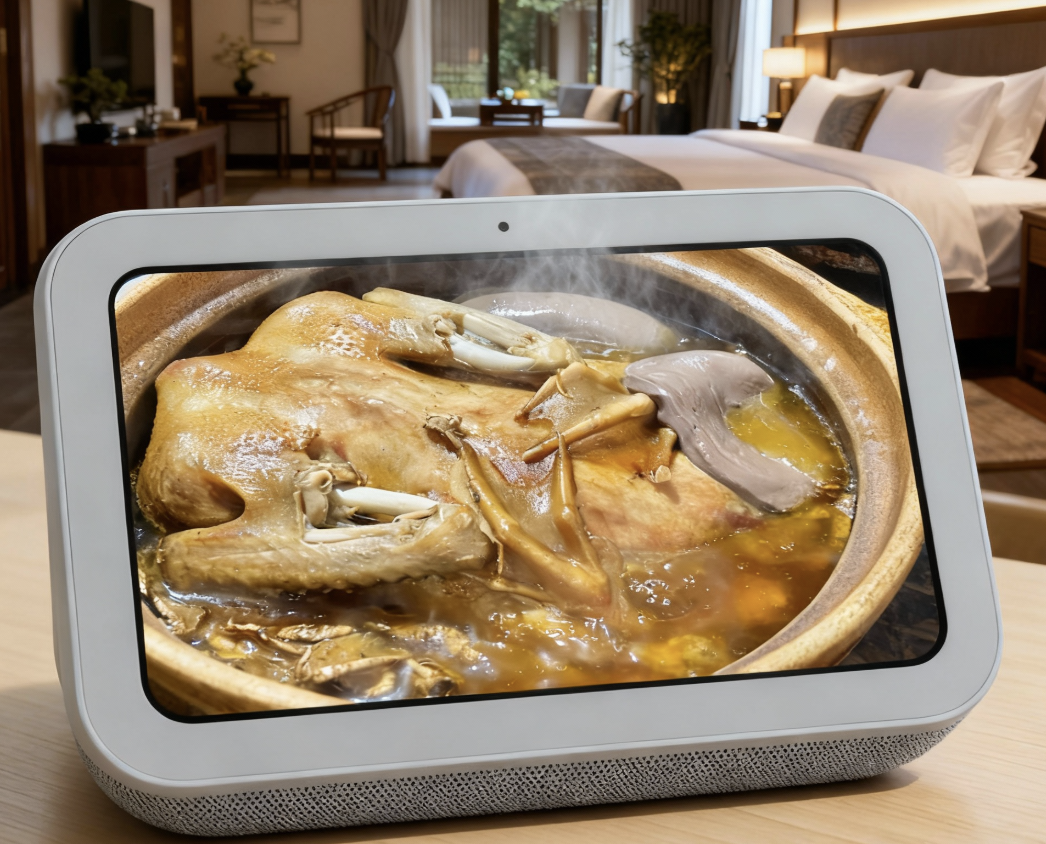
Smart players have begun to realize thatintelligent in-room terminals are the best bridge connecting guests and services. The approach of a regional hotel group is worth learning from: Instead of a full-scale rollout, they first deployed smart speaker systems on executive floors to handle high-frequency needs such as meal delivery, wake-up calls, and facility control through voice interaction. After a 3-month trial run, service satisfaction on executive floors increased by 23%, and complaint rates dropped by nearly half. This gradual in-room intelligent upgrade strategy not only controls risks but also validates the model.
Path 3: Building Full-Link AI Agents
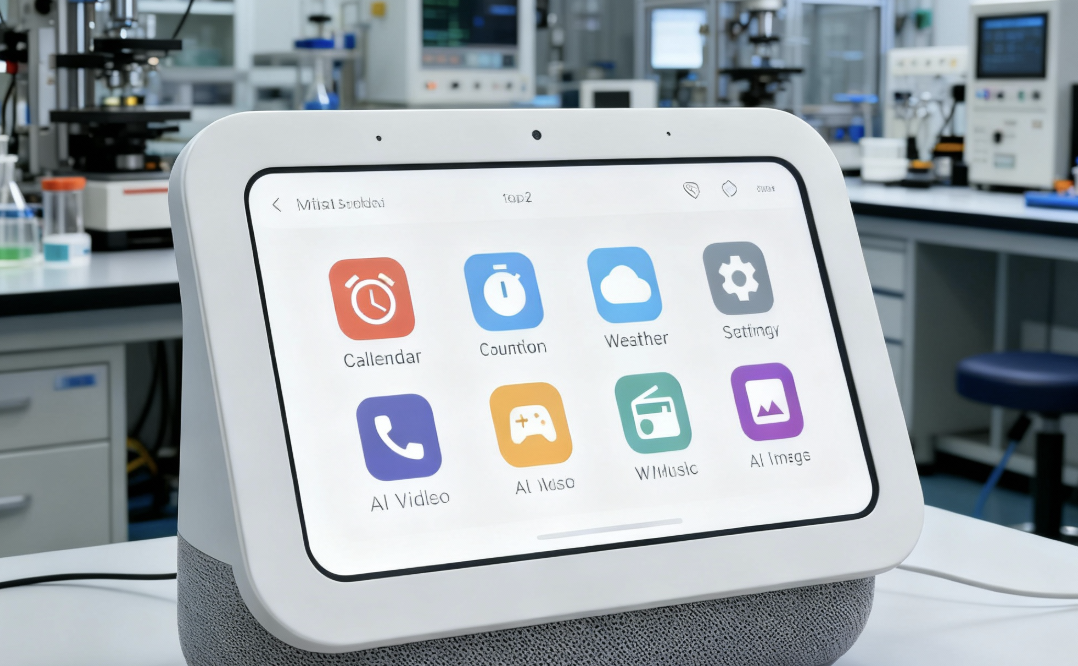
Leading players are already exploring deeper transformations. The approach of a top 10 domestic hotel group is representative: Withintelligent in-room terminals as the core touchpoint, it connects multiple systems including PMS, customer service, and engineering to build a completeAI agent ecosystem. Through in-room smart speakers, guests can not only control facilities and request services but also inquire about surrounding information, book restaurants, and even check out. What's more, the system learns guest preferences and proactively provides personalized recommendations.
Implementation Key Points: Details Determine Success or Failure
Here are some easily overlooked but crucial points to share:
First, the experience design ofintelligent voice interaction is far more complex than imagined. A hotel initially used a general voice solution with a recognition rate of less than 70%, but later optimized the corpus and interaction logic for hotel scenarios, increasing the recognition rate to over 95%. The uniqueness of hotel scenarios—relatively quiet environment, relatively standard needs, and long user stay time—actually makes them very suitable for in-depth application of voice interaction.
Second, hardware selection should consider long-term maintenance costs. Many hotels on the market are attracted by low-cost solutions, only to find the systems closed and difficult to upgrade. A wise approach is to choose an open architecture to ensure that hotel AI voice assistants can be continuously iterated. The experience of a hotel chain is to upgrade the software system on the basis of existing speakers, which not only protects previous investments but also achieves intelligent transformation.
Finally, data security and privacy protection must be considered upfront.Intelligent in-room terminals collect a large amount of user behavior data, and finding a balance between providing personalized services and protecting privacy requires a clear strategy at the beginning of system design.
Final Thoughts
The construction ofAI agents in the hotel industry is not a technology competition but a service upgrade. The key to success lies not in how many cutting-edge technologies are used but in whether they truly solve guest pain points and improve operational efficiency. From the cases we have接触ed, enterprises that start from the in-room scenario, take intelligent voice terminals as a starting point, and progressively promote smart hotel solutions often achieve better return on investment.
After all, even the smartest system needs a suitable carrier, and the不起眼 smart speaker in the room may be the fulcrum to leverage the entire hotel's digital transformation.
 28 Oct, 2025