
- By BitSeed
- AI Frontier
- 17 Sep
How Training Institutions Can Use AI Agents to Enhance Learning Outcomes
At the parent-teacher conference that just ended last month, Ms. Zhang once again raised a long-standing concern to the training institution's teacher: her child still makes mistakes in math problems even after repeated explanations, has non-standard English pronunciation, and spends a lot of time studying but progresses slowly. This is not just Ms. Zhang's confusion. According to the latest data from the Chinese Academy of Educational Sciences, the scale of China's smart education market is expected to exceed 900 billion yuan by 2025, with a compound annual growth rate of about 21%. Behind this figure lies the urgent demand of millions of parents for personalized and efficient learning solutions.
The biggest challenge facing traditional training institutions is their inability to truly teach students in accordance with their aptitude. In a class of twenty to thirty students, teachers struggle to accurately grasp each child's learning characteristics and weak points. Even in small-class teaching, it's difficult for teachers to give each student sufficient attention within limited time. The emergence of AI agents has provided a breakthrough for this dilemma. Through continuous data collection and analysis, AI agents can accurately identify students' knowledge blind spots, serving as each student's personal teaching assistant to accompany them in learning anytime and anywhere.
Adaptive education platforms represented by Squirrel Ai have already verified the effectiveness of AI agents in practice. Since 2014, they have been exploring the application of artificial intelligence in education. By using deep learning algorithms to analyze students' learning data, they can accurately determine students' weak knowledge points and provide personalized learning paths. In the man-machine battle held in Chengdu, students in the teaching robot group achieved a score improvement 7 points higher than those in the excellent teacher group, a result that shocked the industry.
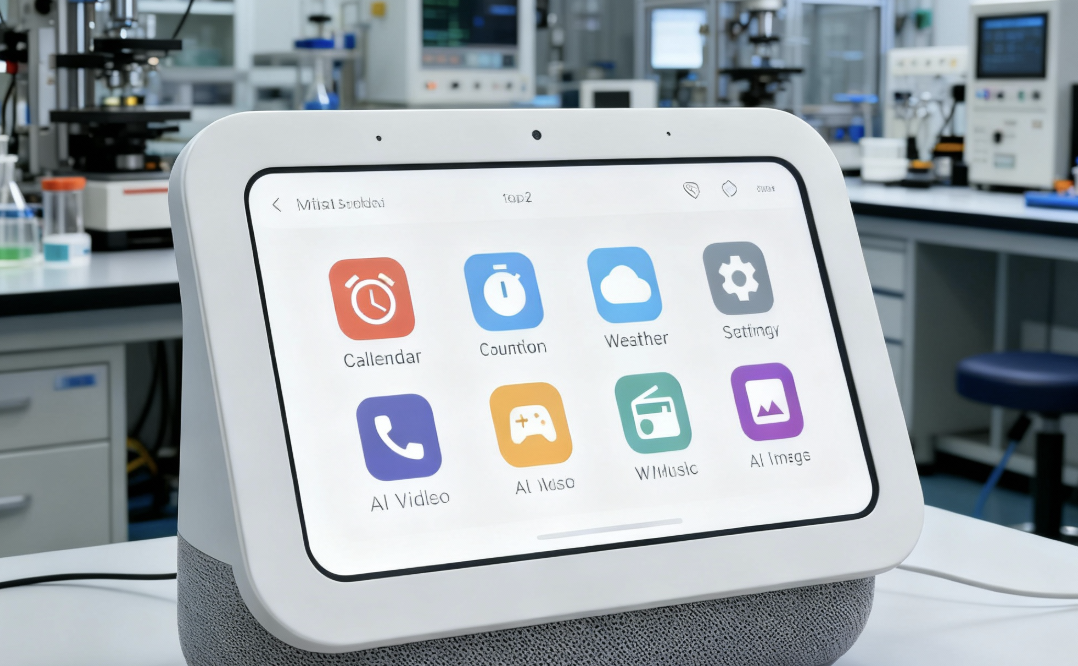
The maturity of voice interaction terminal devices has provided a more natural interaction method for the implementation of AI agents in training scenarios. Unlike traditional keyboard input, voice interaction lowers the usage threshold, making it particularly suitable for younger students. Our Jiaopeitong AI Check-in Machine is an intelligent voice interaction terminal specifically designed for training scenarios. Students only need to say "Xiaoyu, I want to check in for oral English" to complete the learning check-in. The entire process is manual-free and phone-free, making learning more relaxed and natural. In practical applications, it was found that in classrooms equipped with smart speakers, students' classroom participation increased by 35%, and the frequency of Q&A interactions increased by 2.3 times.
Data quality is the key to the effectiveness of AI agents. Training institutions need to establish a complete data collection system, including multi-dimensional information such as students' answer records, learning duration, error distribution, and knowledge point mastery. Our solution uses multi-modal AI analysis technology, which can not only record voice check-ins but also intelligently evaluate learning outcomes in various forms such as videos and photos. For example, during oral check-ins, the system will automatically analyze pronunciation accuracy, speaking speed, and intonation, giving an accurate score like 92/100; when homework is photographed, it can identify layout neatness, key point coverage, and error distribution. A well-known K12 training institution, by introducing our system, has established a learning database covering 30,000 students. The AI model trained based on this data can predict the probability of students mastering specific knowledge points with an accuracy rate of 87%.
In practical applications, AI agents are not meant to replace teachers but to become their capable assistants. Through our online classroom function, teachers can manage classes one-to-many, conduct voice broadcasts, assign and correct homework, and perform attendance statistics. The system automatically aggregates data such as attendance rate and check-in completion, forming an intuitive data dashboard to assist teaching decision-making. Teachers can quickly understand each student's learning progress and spend more time on emotional communication and quality cultivation. In a pilot program at an education group in Beijing, after using AI agents to assist teaching, teachers' lesson preparation time was reduced by 40%, while the time for in-depth communication with students increased by 60%.
The issue of mobile phone dependence, which parents are most concerned about, has also been well addressed with the help of AI agents. Our smart speaker, as a family-friendly voice terminal, can replace parents' mobile phones to complete most learning tasks. Classroom learning, homework check-ins, and communication with teachers can all be done on the speaker, effectively reducing the risk of distraction and addiction caused by children's exposure to mobile phones. The system also supports parental control functions, including time period control, content filtering, and remote viewing, making the learning environment safer and more controllable.
 28 Oct, 2025