
- By BitSeed
- AI Frontier
- 17 Sep
How to Deploy a Private Large Model in a Hotel's Own Computer Room
Against the backdrop of accelerated digital transformation in the hotel industry, the deployment of private large models is becoming a key initiative for leading enterprises to build core competitiveness. Through local deployment, hotels can not only gain control over data sovereignty but also customize AI capabilities based on business scenarios, driving the transformation of service models from "standardized" to "precision-oriented". This article will focus on the core aspects of deploying private large models in hotel computer rooms and provide technical references combined with industry practices.
I. Hardware Architecture Design and Selection Logic
Hardware planning for private deployment needs to balance computing power requirements and cost-effectiveness. Taking the mainstream 7B parameter model as an example, a single NVIDIA A10G card (24GB memory) can support basic inference tasks. However, if handling high-concurrency requests (such as simultaneous calls from thousands of guest rooms), it is recommended to adopt an 8×A100 80G GPU cluster with NVLink interconnection technology, which can increase memory utilization to 92%. For small and medium-sized hotels, a dual NVIDIA A10G card solution can be considered, using model quantization technology (such as GPTQ-4bit) to compress memory usage to 5GB and increase inference speed by 25%. It is worth noting that hardware selection should reserve 20% computing power redundancy to meet future model iteration needs.
II. Software Environment and Model Optimization Strategies
The deployment environment needs to build a stable stack of CUDA 12.x + PyTorch 2.1.2, combined with the vLLM inference engine to implement Continuous Batching, which can increase GPU utilization from 35% to 85%. Model quantization is the key to balancing accuracy and performance - comparative experiments show that a 4-bit quantization scheme can reduce the memory usage of a 7B model by 75%, control inference latency within 22ms/Token, with an accuracy loss of less than 5%. For the specific needs of hotel scenarios, it is recommended to use knowledge distillation technology to compress the model size while retaining core functional modules such as room service and customer consultation.
III. Construction of Security and Operation and Maintenance System
Data security is the core requirement of private deployment. It is recommended to adopt two-way TLS authentication and IPSec VPN dedicated lines to achieve internal and external network isolation, and key operation logs need to be audited in real-time through the ELK stack. At the operation and maintenance level, the Prometheus+Grafana monitoring system can track more than 20 core indicators such as GPU utilization and request latency, combined with the Hystrix circuit breaker mechanism to ensure service continuity. Measured data from a hotel chain shows that this solution extends the system's average fault-free operation time to 99.96%.
IV. Scenario-Based Capability Extension
The deployed private large model can support multiple scenario innovations:
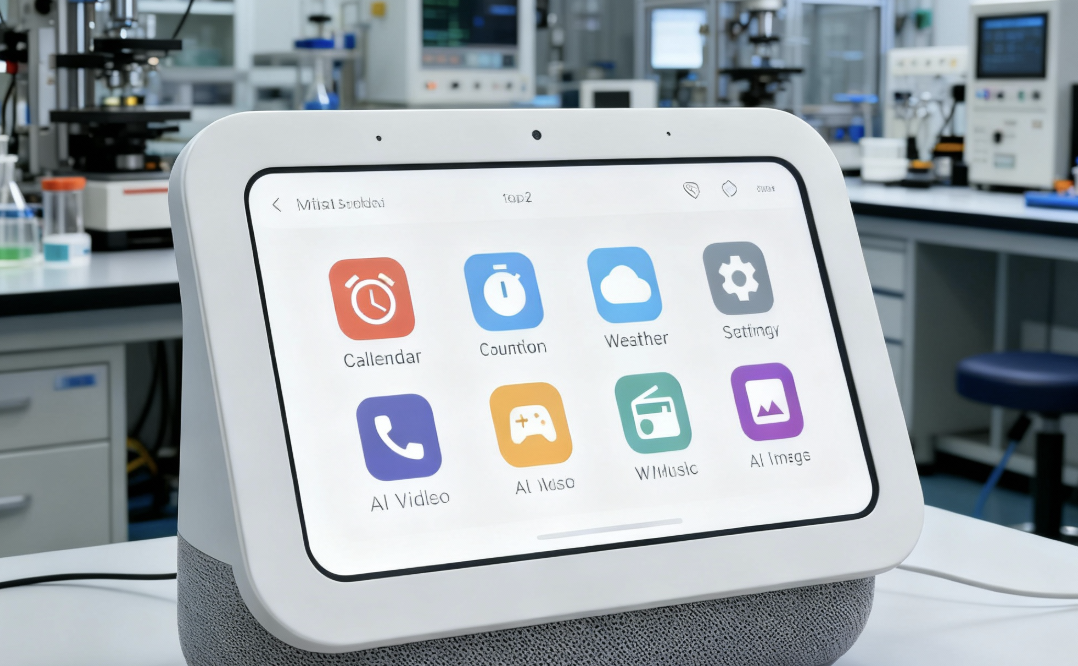
1. Intelligent Interaction Hub: Realize natural language interaction such as room equipment control and service requests through voice interaction terminals. A pilot project by a leading brand shows that the voice command recognition accuracy reaches 98.7%, and customer satisfaction increases by 40%;
2. Operational Decision Engine: A demand forecasting model trained based on historical data can optimize room pricing strategies, achieving a revenue increase of 15%-22%;
3. Service Process Automation: Combined with RPA technology, the time for processes such as check-in and check-out settlement is reduced from 15 minutes to within 2 minutes.
Successful deployment requires following the three-stage path of "demand analysis - POC verification - gray release". It is recommended to first carry out a pilot in a single building, focusing on verifying model inference performance and compatibility with business systems. A case from an international hotel group shows that through phased deployment, model iteration was completed in 200 stores across the group within 6 months, and the IT investment payback period was shortened to 14 months.
Currently, AI technology is reshaping the value chain of the hotel industry. Through the deployment of private large models, hotels can not only build a differentiated competitive barrier but also tap the long-tail value of data assets. For technology suppliers, providing end-to-end solutions from hardware adaptation to scenario implementation will be the key to winning customer trust.
 28 Oct, 2025